

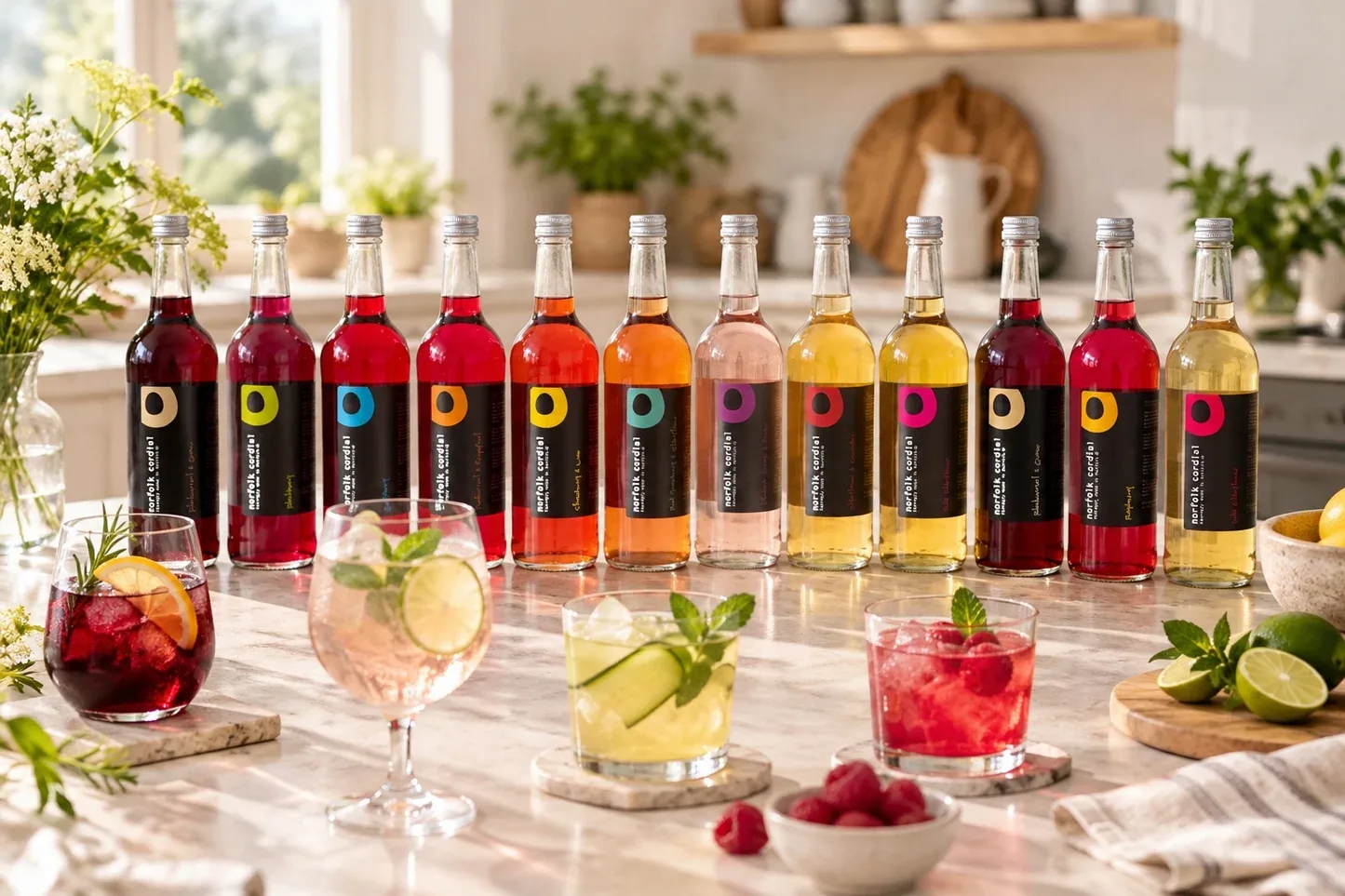
Norfolk Cordial’s 12-bottle selection (750ml bottles). Photo: Norfolk Cordial. |
There is something rather lovely about opening a bottle of cordial when the fruit it evokes seems a long way from the season outside. As the weather turns colder, a splash of rhubarb, blackcurrant or elderflower can bring a different character to a drink, even if the garden is looking distinctly wintry. Norfolk Cordial is an independent Norfolk producer whose range makes an interesting case for treating cordial as something more than an everyday squash. Its combinations pair familiar ingredients in ways that invite a little experimentation, whether you are putting together a simple drink for yourself or welcoming friends around the kitchen table. Starting with the fruitThe company describes its approach as pressing real fruit in small batches and says it looks to British growers wherever possible. Its emphasis is on the ingredients themselves rather than relying on concentrates. Norfolk Cordial says all its cordials are vegan and made without artificial colours, flavours or preservatives. That is worth distinguishing from an assumption that every ingredient comes from Norfolk. The company's approach to sourcing is described on its website, and ingredients such as oranges and ginger are reminders that a locally made product can draw on flavours from much further afield. The idea behind the range is easy to understand. Think of the way a squeeze of lemon can change the balance of a dessert, or how a little ginger can add interest to something sweet. Combining ingredients rather than relying on a single fruit opens up a different set of possibilities. Familiar flavours, unexpected partnersIt all began with Wild Elderflower, the first cordial Norfolk Cordial ever made. The range now includes combinations such as rhubarb with orange and ginger. Rhubarb is familiar to many of us from crumbles and other puddings, where its sharpness is usually balanced by sweetness. Orange and ginger make for an intriguing departure from the more traditional pairing with custard. Blackcurrant with quince is another interesting choice. Blackcurrants may be familiar from garden bushes, jams and drinks, but quince is less likely to appear in the everyday fruit bowl. It is often associated with preserves, so the pairing offers a chance to explore a fruit that might otherwise pass us by. |
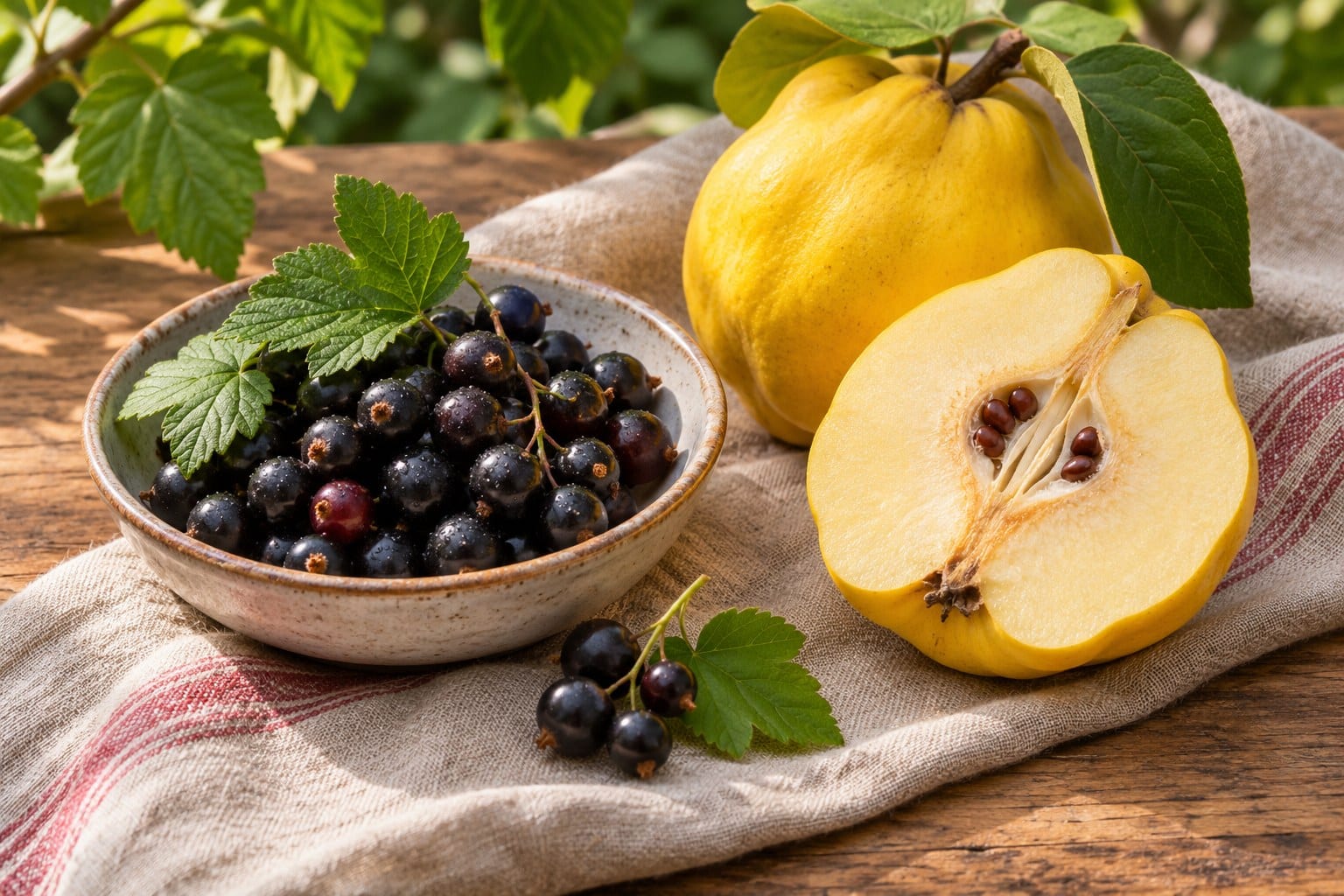 Illustration: blackcurrants and quince. |
Gooseberry with elderflower brings together two flavours associated with the British summer. Elderflower with cucumber, meanwhile, takes a different direction, pairing a floral ingredient with something we might usually think of as part of a salad. The producer lists these combinations in its cordial range, which includes 250ml and 750ml bottle formats. Flavours and availability can change, so it is worth checking the current selection if you are looking for something specific. Making a little occasion of a drinkCordial need not require a particularly elaborate recipe. A glass, water and a small measure of cordial are a good starting point. Norfolk Cordial recommends one part cordial to ten parts water. You can adjust the ratio to taste. Sparkling water is an easy alternative to still water if you want to make the drink feel a little more celebratory. A slice of orange, a few mint leaves or a twist of lemon peel can make an attractive addition, depending on the ingredients in the cordial. You do not need to buy an entire collection of garnishes or mixing equipment to experiment. For gatherings where guests are choosing between alcoholic and non-alcoholic options, having a cordial on hand can make the drinks table more interesting. You can offer people a simple base to adapt themselves, rather than assuming everyone wants the same thing. |
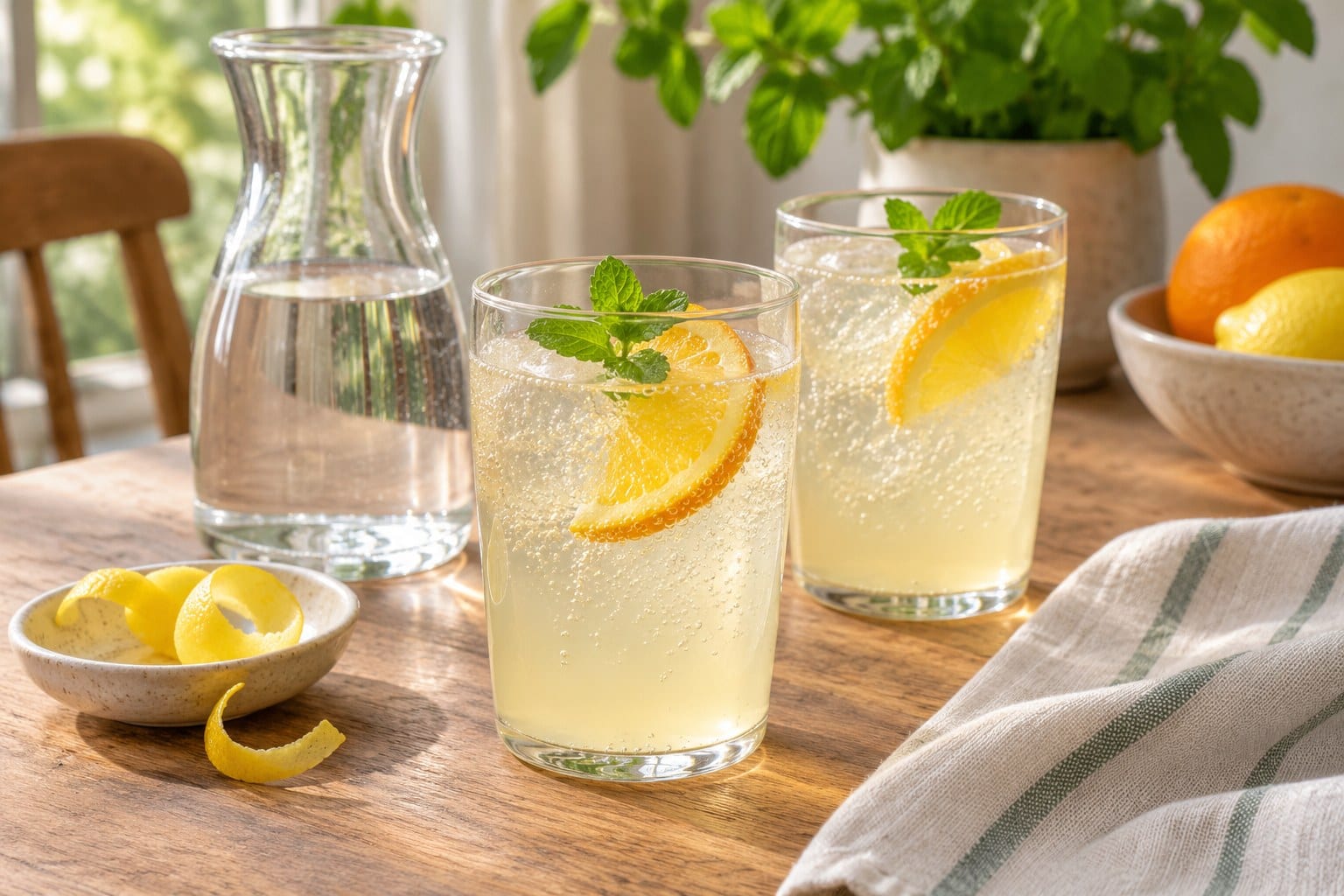 Illustration: sparkling cordial with citrus and mint. |
Beyond the drinks cabinetThe company also publishes ideas for using cordial in food. Its Beyond the Glass collection includes an elderflower lemon cake and a blackberry and thyme dressing. These are useful illustrations of how fruit-based flavourings can have a place in the kitchen as well as the glass. If you are using a sweetened cordial in a recipe, it is sensible to follow a recipe designed for that ingredient rather than substituting it measure for measure for unsweetened juice. Norfolk is fortunate to have food and drink businesses working with ingredients in many different ways. Some make something recognisably traditional; others take a familiar idea and give it a new direction. Norfolk Cordial is an example of the latter. You can find out more about the producer and its stated sourcing approach on its about page. This is not a tasting verdict or a recommendation of one flavour over another, but an invitation to explore the possibilities. Perhaps the next time a bottle of cordial finds its way into your cupboard, it might become the starting point for something other than a hurried glass of squash. A little fruit, a favourite glass and a moment to enjoy it can be enough. |



0 Comments
Join the conversation
Be the first to comment
Share your thoughts above.