

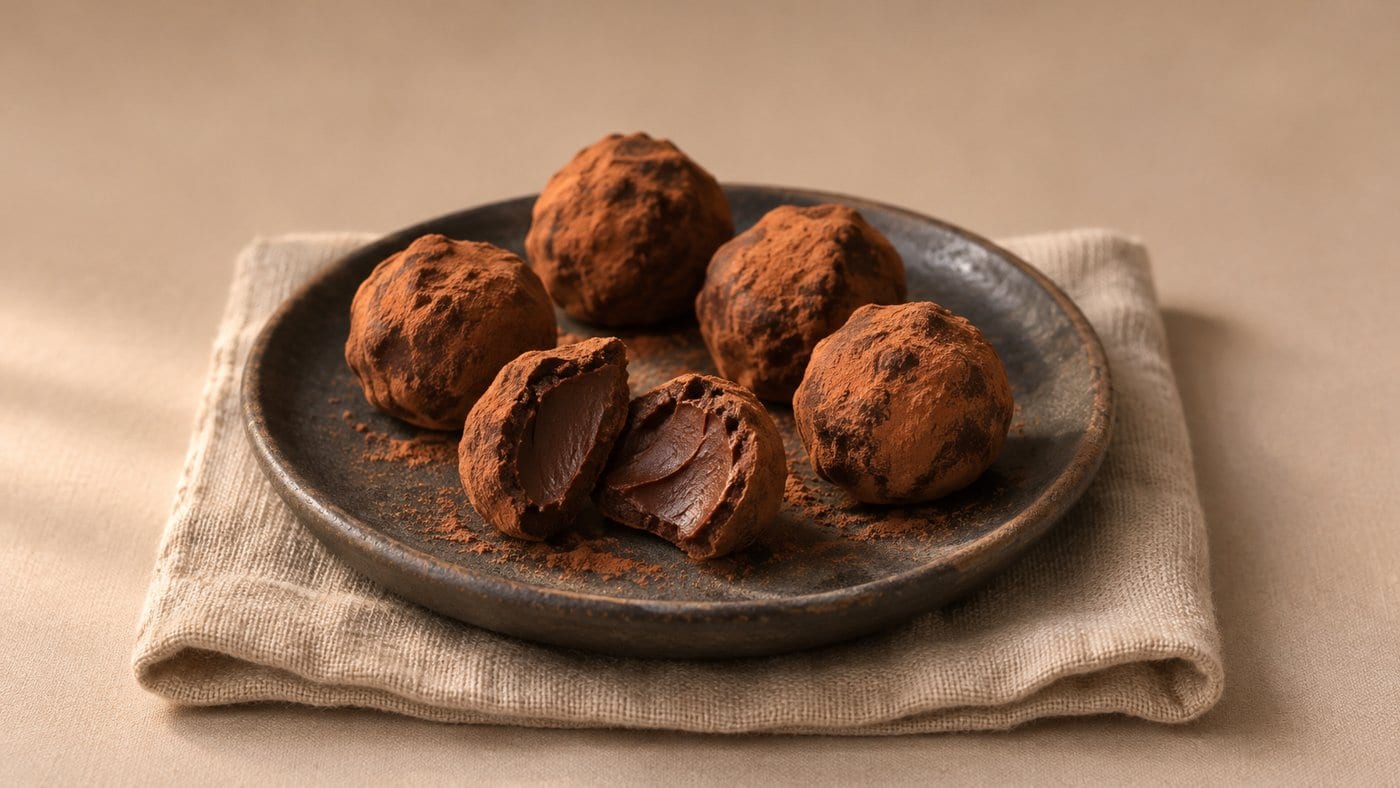
A box of chocolate can carry more of a story than its flavour name. For Booja-Booja, a Norfolk maker of chocolate truffles, that story includes a decision to work without dairy, a long-standing commitment to organic ingredients and an address just outside Norwich. It also includes something less glamorous but especially useful: clear information about the nuts handled in its factory. Booja-Booja says it began in 1999 and describes itself as an independently owned manufacturer of chocolate truffles and ice cream. The company's registered office is at Little Melton Food Park, Little Melton Road, near Norwich, while the maker says its products are produced at its own site in Norfolk. A registered address does not establish precisely which manufacturing operations happen in every building, and the company has not provided a factory tour or interview for this article. The recipe starts with a decisionThe business says all its products are vegan and made without dairy, gluten or soya ingredients. That is an unusual enough proposition to shape the whole range, rather than leaving plant-based options as a small alternative on the shelf. Its website also says all its products are certified organic by the Soil Association. Those statements describe a manufacturing policy and certification as reported by the producer. They are not a claim that every product suits every dietary need. Indeed, the company's published FAQ is direct about its limits. It uses hazelnuts, pecans, almonds and cashews in its factory, and says shared equipment means the different nuts cannot be completely segregated. Individual packs carry allergy warnings; customers with allergies need to read the label for the actual product, not rely on the word 'vegan'. A look at the ingredient lists makes the idea more concrete. Its Hazelnut Crunch truffles, for example, list chocolate made with cocoa mass, cane sugar and cocoa butter, together with hazelnuts, coconut oil and cocoa powder. Its chocolate-orange recipe includes dried mandarin pieces and orange extract. These are ingredients stated by the maker, not flavours sampled or assessed by Norwich Pulse. |
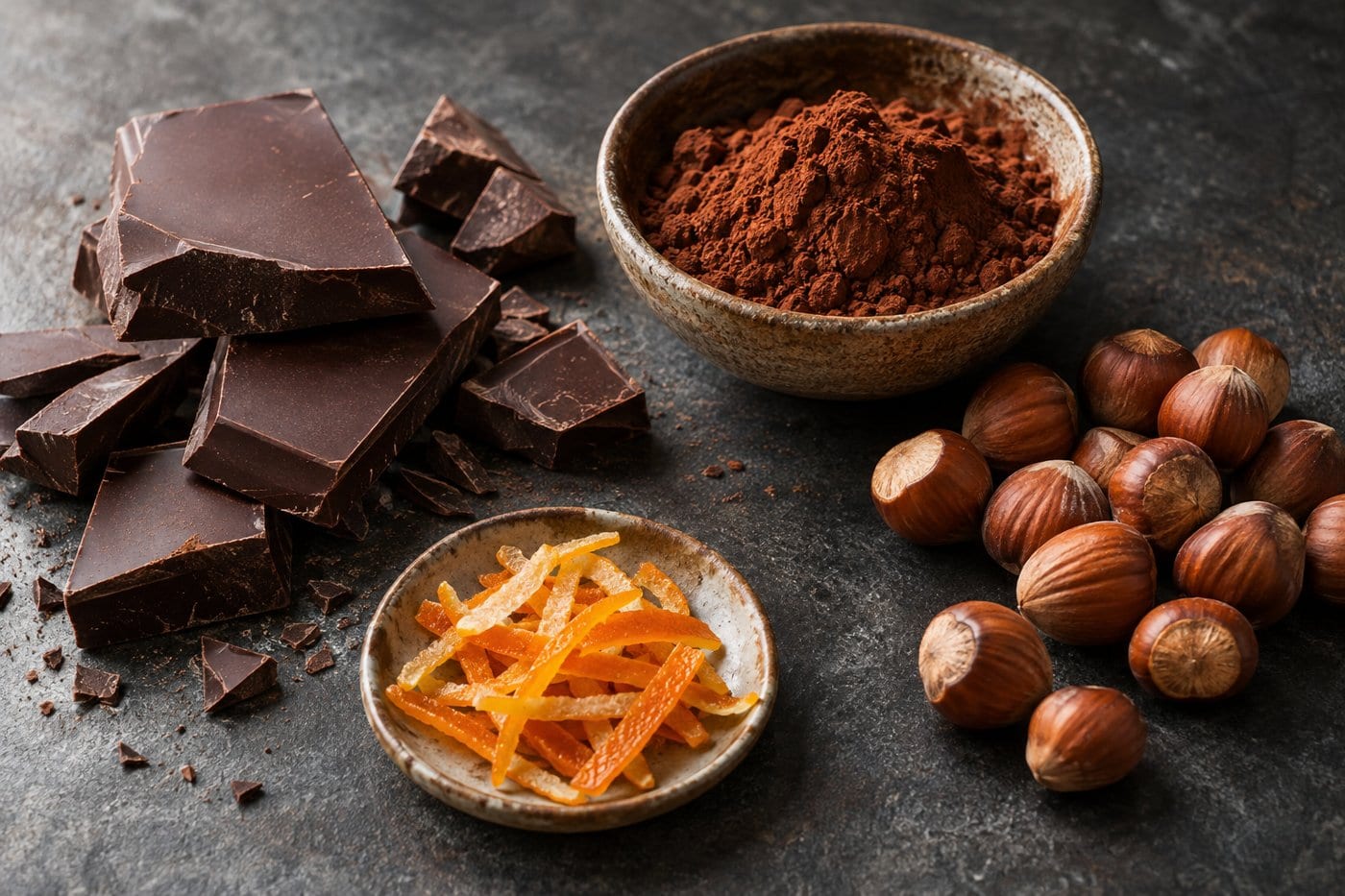 Illustration: Dark chocolate, cocoa, hazelnuts and orange peel. |
Making choices visibleBooja-Booja says it uses organic cane sugar in its confections. Rather than offering a sweeping claim that sugar-free is automatically better, its FAQ explains why the company prefers that sweetener in its recipes. It also says its products do not contain palm oil. Those choices may be useful to shoppers comparing ingredients, but they do not make the chocolates a health food or amount to a nutrition recommendation. The same attention to labels extends to gluten. Booja-Booja says it makes products in its own dairy-free, gluten-free and soya-free facility and undertakes independent laboratory checks. Its FAQ notes that gluten-free oat flour is still highlighted in ingredient information because oats sit within a major-allergen labelling category. Anyone with coeliac disease, a serious allergy or another medical dietary requirement should check the current manufacturer label and advice specific to their circumstances. The packaging is part of the maker's identity too. Booja-Booja's own history page traces more than 25 years of packaging and product developments, including decorative gift boxes and a growing range. Some current gift-box descriptions say the boxes are hand-painted by artists in Kashmir. That is a company description of particular packaging, not evidence that the chocolate itself is made overseas or that those artists have been interviewed for this story. |
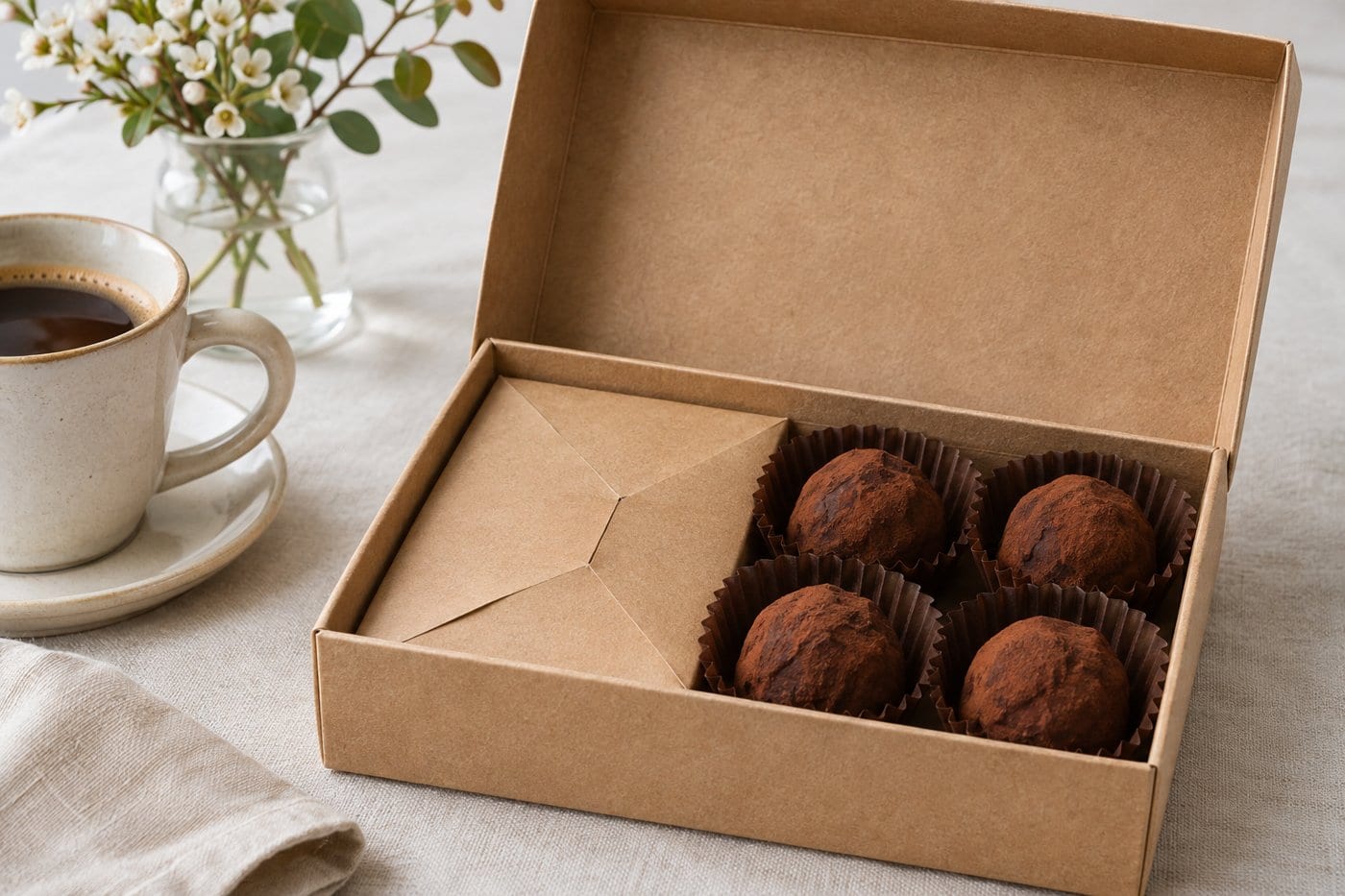 Illustration: Truffles in an unbranded chocolate box. |
The Norfolk connectionCompanies House identifies The Booja Booja Company Limited as an active business, incorporated in June 2001, with chocolate and cocoa confectionery manufacturing among its recorded activities. The company's account of beginning in 1999 and the legal incorporation date refer to different milestones, so neither date should replace the other without explanation. For readers, the local connection is a reminder that familiar food brands are not all headquartered in distant cities. The company places its roots and production in Norfolk, and the ingredients on a small truffle box bring together decisions about sourcing, food restrictions and how treats are made. None of this requires pretending to have visited the factory, tasted the chocolates or spoken to its staff. Those interested in particular products should use the maker's current product pages for ingredients, prices and availability rather than treating older descriptions as a stock guarantee. Booja-Booja's FAQ is also worth reading before buying for somebody with a nut allergy: its precise warnings are as much a part of informed choice as a flavour description. What makes the story interesting is not that these chocolates are necessarily better than another maker's. It is the clear set of decisions behind them, and the importance of reading the less romantic parts of a label. A Norfolk truffle maker can be both a local food story and a useful lesson in how much detail one small chocolate can hold. |



0 Comments
Join the conversation
Be the first to comment
Share your thoughts above.