
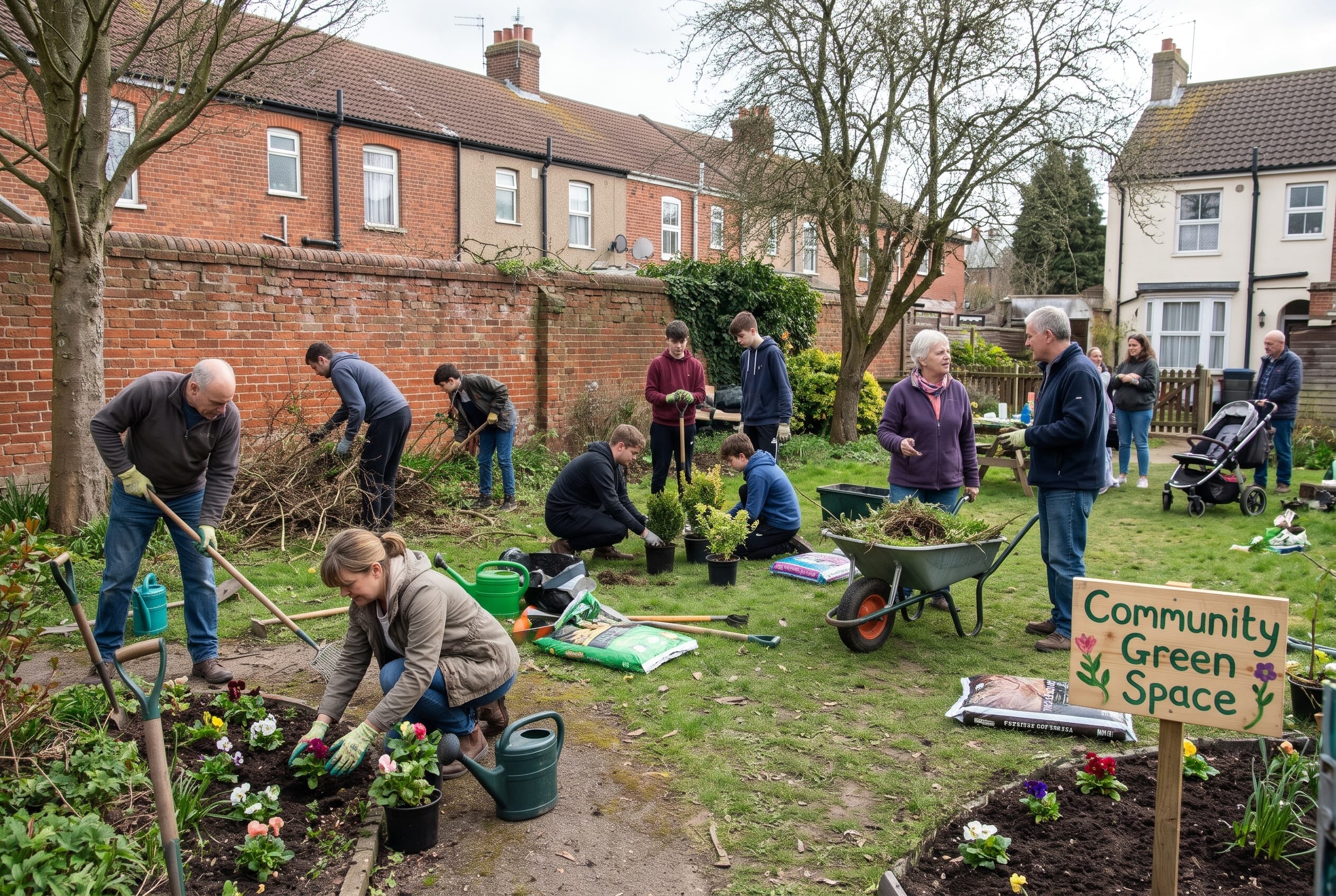
A garden does not always begin behind a gate. Sometimes it begins on a patch of grass between homes, where the people living nearby can see possibilities in a space they share. At Lefroy Road in Mile Cross, residents, Norfolk Wildlife Trust and members of the Mile Cross Projects & Events Group came together in 2022 to form a community group called Growing Matters. Their aim was to create a garden from communal grass areas on the estate. There was no single grand transformation overnight. According to an account published by Kew’s Grow Wild programme, the group planted a wildflower patch for pollinators and held a public event to ask residents what else they would like. Raised beds for fruit and vegetables were among the popular suggestions. |
The group gained permission and support from Norwich City Council for three beds, then applied for a Grow Wild grant. The money helped provide tools, compost and plants, as well as workshops where residents could learn about sowing, growing, harvesting and cooking. There were everyday problems to solve along the way. Filling the beds took a great deal of soil. Water had to be brought from a nearby flat until the group obtained a rainwater butt. It is the sort of detail that rarely appears in a picture of a thriving garden, but somebody has to work it out before the growing can begin. A garden for people without one |
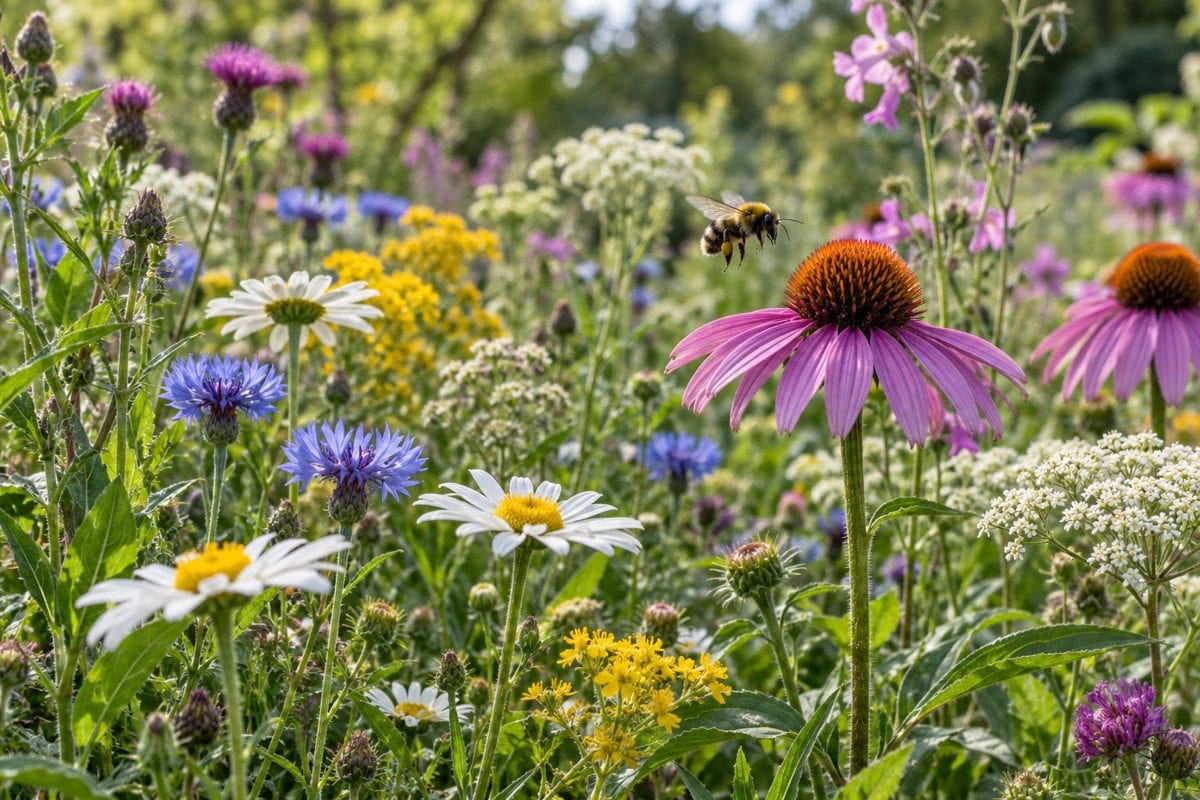 Illustration: flowers and a bee. |
For Diem, one of the volunteers who spoke to Grow Wild, the project offered something she did not have at home: a garden. She described enjoying nature and wanting green spaces that people could use. She also spoke about learning together, with volunteers bringing different skills and supporting one another. Another resident told Grow Wild that people had started changing their routes to walk through that part of the estate and see the garden. It is a small observation, but an appealing one. A place once crossed on the way somewhere else had become somewhere a person might choose to pass. The project was also about more than the vegetables in the beds. Grow Wild reported that the group planted fruit bushes and flowers chosen to be friendly to pollinators. Workshops gave residents a chance to learn, and a harvest festival brought people together around what had been grown. There is a particular pleasure in that mixture of useful and beautiful. A flower can give colour to a familiar view and provide food for an insect; a raised bed can make room for growing close to home. What matters most to one neighbour may be different from what draws another in. Small patches, bigger connectionsGrowing Matters is part of a wider history of community growing in Mile Cross. Norwich Plant Hub recorded its work with local groups and, in summer 2023, described supporting residents to manage a pollinator patch on Lefroy Road with the council’s agreement. Its later records describe raised beds at Lefroy Road and an orchard garden at Bacton Road. In March 2025, Plant Hub and Green Hearts planned workshops at both sites, including seed sowing and preparation for the growing season. Those examples show how one group can contribute plants, knowledge or practical help to another. |
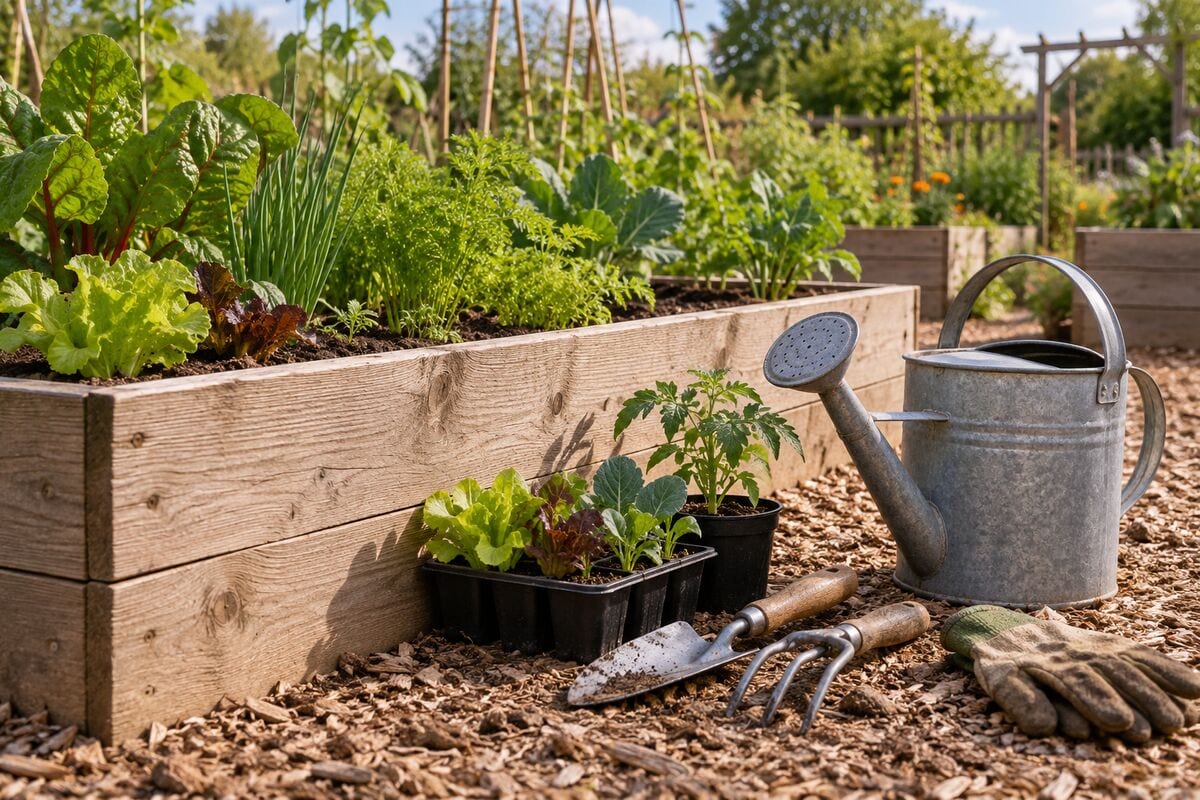 Illustration: a raised bed, seedlings and gardening tools. |
An undated Community Conversations account describes other Green Hearts projects, including a pollinator patch near the Mile Cross towers and neighbours caring for young fruit trees at Bacton Road. It also records local people clearing and planting an alleyway with support from Norfolk Wildlife Trust and Mind. The projects are different in scale and purpose. Not every green space needs to become a vegetable garden, and not every group will have the same ambitions. Some people may want to grow food; others may be drawn to flowers, wildlife or simply helping to look after a place they know. Finding a place to beginFor anyone inspired to get involved, joining an existing group can be a good first step. You can learn what the space already needs, meet the people who care for it and find out what kind of help would be useful. Norwich City Council says residents can join a community garden group, help maintain a local green space or ask to manage a space. It welcomes beginners as well as experienced gardeners. Its community gardens and green spaces page includes a link to a map of existing gardens and explains how to make an enquiry. It is worth contacting a group before turning up. A map can help you find a project, but it will not necessarily tell you whether a session is taking place or what help is currently needed. If you have noticed a space that might benefit from care, the council asks residents to email [email protected] with their idea and its location. A community enabling officer can discuss the proposal and arrange a meeting. The council then reviews the details and talks through possible support; an agreement or friends-group arrangement can provide permission to care for an appropriate space. That conversation comes before planting. Shared land can have an owner, established uses and neighbours with different views about what should happen there. The council says it can offer advice, tools and help with permissions, although a request is not a guarantee that every idea will go ahead. Lefroy Road’s story is a useful example of what can follow when residents, local organisations and the council work together. Its particular mix of wildflowers, growing beds and workshops grew from that place and those people. Another neighbourhood might choose something else entirely. The first question could be as simple as: who else cares about this patch, and what might we make possible together? |




0 Comments
Join the conversation
Be the first to comment
Share your thoughts above.